
Photography isn’t just about freezing a moment in time. It’s about preserving a feeling that words often fail to express. A technically perfect image may impress people for a few seconds, yet a photograph filled with genuine emotion can stay with someone for years.
That’s why learning How to Capture Emotions in Photography Like a Pro is one of the most valuable skills you can develop. Professional photographers know that viewers rarely remember camera settings. Instead, they remember the smile that felt real, the tear that wasn’t staged, or the quiet glance between two people that spoke louder than words.
Whether you shoot portraits, weddings, family sessions, travel, or street photography, emotion is what transforms an ordinary image into a powerful story. The good news is that capturing emotion isn’t reserved for professionals with expensive gear. It comes from observation, patience, trust, and thoughtful composition.
In this guide, you’ll learn practical techniques that help you photograph authentic human emotions. You’ll also discover how lighting, body language, timing, and storytelling work together to create unforgettable images.
What Is Emotional Photography?
Emotional photography is the art of capturing authentic feelings through a single image. Rather than focusing only on sharpness or perfect composition, it emphasizes the emotional connection between the subject and the viewer.
A successful emotional photograph allows someone who wasn’t present to experience the moment almost as if they were standing there. The viewer doesn’t simply see the image. They feel it.
For example:
- A child running toward a parent after months apart.
- A bride wiping away happy tears before walking down the aisle.
- An elderly couple quietly holding hands on a park bench.
- A traveler staring across a mountain landscape after reaching the summit.
These photographs tell stories without requiring a single caption.
Emotional Photography vs. Traditional Photography
| Feature | Emotional Photography | Traditional Photography |
| Primary Goal | Tell a story through emotion | Capture a visually appealing image |
| Main Focus | Genuine human feelings | Technical perfection |
| Subject Expression | Natural and authentic | Often posed |
| Viewer Reaction | Emotional connection | Visual admiration |
| Long-Term Impact | Memorable and meaningful | Attractive but sometimes forgettable |
Neither style is better than the other. However, combining technical skill with emotional storytelling often produces the strongest photographs.
Why Emotion Is the Heart of Great Photography
People naturally connect with feelings before they notice technical details. A photograph with slight motion blur can still become iconic if it captures an unforgettable moment. On the other hand, a perfectly exposed image may leave little impression if it lacks emotion.
Professional photographers understand this principle well. They don’t simply document events. They preserve experiences.
Emotion Creates an Instant Connection
When someone looks at an emotional image, the brain quickly searches for familiar experiences.
A joyful laugh may remind the viewer of childhood.
A lonely silhouette can trigger memories of difficult times.
A parent’s embrace may evoke feelings of comfort and security.
That instant emotional response is what makes photography so powerful.
“A photograph is usually looked at—seldom looked into.” — Ansel Adams
Great emotional photography encourages viewers to look deeper rather than glance and move on.
Emotional Images Tell Better Stories
Every memorable photograph answers silent questions.
- Who is this person?
- What happened just before this moment?
- What might happen next?
- Why does this scene matter?
Instead of showing only what happened, emotional photography invites curiosity.
Imagine two photographs of the same birthday party.
The first shows everyone standing in a neat row, smiling at the camera.
The second captures a little girl hugging her grandmother after blowing out the candles while both are laughing with tears in their eyes.
The second image instantly tells a richer story because it reveals genuine human connection.
Emotional Photos Stand the Test of Time
Photography trends constantly change.
Editing styles evolve.
Camera technology improves.
Social media filters come and go.
Human emotions, however, remain timeless.
A heartfelt image taken decades ago can still move people today because happiness, grief, excitement, love, and hope never become outdated.
This is why many famous documentary photographs remain influential years after they were taken.
Emotion Makes Your Portfolio More Memorable
If you’re building a photography portfolio, emotional storytelling helps your work stand out in a crowded industry.
Potential clients often choose photographers based on how images make them feel rather than which camera they use.
For example:
A wedding couple usually isn’t interested in hearing about autofocus tracking or sensor size.
They want photographs that remind them how they felt during their first dance.
Parents don’t hire family photographers because of expensive lenses.
They hire someone who can preserve authentic smiles, playful moments, and genuine affection.
When your images consistently evoke emotion, people begin to recognize your unique style.
Understand Human Emotions Before You Photograph Them
One of the biggest differences between amateur and professional photographers isn’t equipment.
It’s observation.
Professionals spend more time watching people than adjusting camera settings.
If you can recognize emotional signals before they happen, you’ll capture moments that others completely miss.
Learn to Recognize Genuine Facial Expressions
Real emotions appear quickly and disappear just as fast.
Learning to identify these expressions helps you press the shutter at exactly the right moment.
Some of the most common emotions include:
| Emotion | Visual Clues |
| Happiness | Relaxed face, genuine smile, bright eyes |
| Joy | Wide smile, laughter, energetic movement |
| Sadness | Downward gaze, tears, slumped shoulders |
| Surprise | Raised eyebrows, open mouth, widened eyes |
| Pride | Upright posture, confident expression |
| Love | Soft eye contact, gentle smiles, physical closeness |
| Curiosity | Tilted head, focused eyes |
| Relief | Deep exhale, relaxed muscles |
Notice that genuine smiles involve the eyes, not just the mouth.
This small detail often separates authentic portraits from forced ones.
Read Body Language
People communicate constantly without speaking.
In many situations, body language reveals more than facial expressions.
Pay close attention to:
- Folded or relaxed arms
- Hand gestures
- Eye contact
- Shoulder position
- Walking pace
- Distance between people
- Head movement
For example, two friends leaning toward each other while laughing often create a stronger emotional photograph than two people standing stiffly side by side.
Small gestures matter.
A hand resting gently on someone’s shoulder can communicate reassurance more effectively than words.
Learn to Anticipate Emotional Moments
Professional photographers rarely depend on luck.
Instead, they learn patterns.
During weddings, they know parents often become emotional during speeches.
At graduation ceremonies, families react the moment names are announced.
During sporting events, celebrations usually happen immediately after a winning goal.
When you understand the flow of an event, you can position yourself before the emotional moment unfolds instead of reacting afterward.
This anticipation dramatically increases your success rate.
Build Trust With Your Subject
Authentic emotion begins long before you press the shutter.
People rarely reveal genuine feelings in front of someone they don’t trust. Even the best camera can’t overcome discomfort or anxiety.
Professional photographers invest time in building relationships because relaxed subjects naturally express themselves. The camera then becomes almost invisible.
Make People Feel Comfortable
A simple conversation before the session can completely change the atmosphere.
Instead of immediately giving posing instructions, spend a few minutes getting to know your subject.
Ask about:
- Their hobbies
- Favorite travel destinations
- Family
- Pets
- Music they enjoy
- Why the photo session matters to them
These conversations reduce nervousness and create natural smiles before the camera even comes out.
If you’re photographing children, let them play for a few minutes instead of asking them to sit perfectly still. Their real personalities will appear much faster.
Photograph Personality Instead of Perfection
Many people worry about looking perfect in photographs.
Ironically, perfection often removes authenticity.
Instead of correcting every tiny movement, encourage natural interaction.
For portrait sessions, try prompts like:
- “Tell me about the funniest thing that happened this week.”
- “Look at each other instead of the camera.”
- “Walk together like you’re heading to your favorite coffee shop.”
- “Whisper something that always makes them laugh.”
These prompts create genuine reactions that posed instructions simply can’t reproduce.
The goal isn’t to manufacture emotion. It’s to create an environment where real emotion naturally appears.
Sometimes Silence Is the Best Direction
Not every emotional moment needs guidance.
Some of the strongest photographs happen when the photographer quietly observes without interrupting.
Imagine a father seeing his newborn baby for the first time.
A photographer who constantly gives directions risks breaking that emotional connection.
Instead:
- Stay alert.
- Keep your distance when appropriate.
- Let the moment unfold naturally.
- Capture reactions as they happen.
Patience often produces images that no amount of posing can recreate.
Key Takeaway: Mastering How to Capture Emotions in Photography Like a Pro starts with understanding people before mastering your camera. Observation, empathy, and trust form the foundation of every unforgettable emotional photograph.
Master Light to Strengthen Emotion
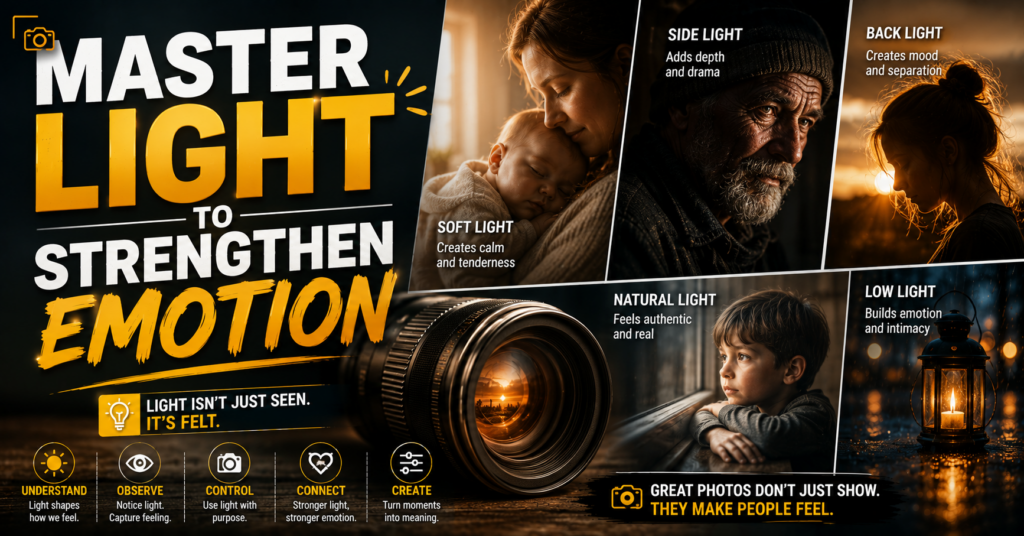
Light does much more than illuminate a subject. It shapes the mood, guides the viewer’s eye, and influences how an image feels. The same person can appear joyful, mysterious, peaceful, or dramatic simply by changing the lighting.
Professional photographers don’t just ask, “Is there enough light?” They ask, “What emotion does this light create?”
Soft Natural Light Creates Warmth and Comfort
Soft light is flattering because it produces gentle shadows and smooth skin tones. It feels calm, welcoming, and intimate.
The best times to find soft natural light include:
- Shortly after sunrise
- One to two hours before sunset
- Near large windows
- Under open shade
- On lightly overcast days
This type of lighting works especially well for:
- Family portraits
- Lifestyle photography
- Couples
- Newborn sessions
- Children’s photography
Example: Imagine a mother reading a bedtime story beside a window. The soft light wrapping around their faces enhances the feeling of love and comfort.
Hard Light Adds Drama
Hard light creates stronger shadows and higher contrast. While beginners often avoid it, professionals use it intentionally to create emotional depth.
Hard light works well when you want to communicate:
- Determination
- Confidence
- Strength
- Mystery
- Tension
You can find hard light during:
- Midday sunlight
- A single spotlight
- Direct flash used creatively
- Strong directional lighting indoors
The key is controlling where the shadows fall instead of eliminating them completely.
Backlighting Creates Dreamy Images
Backlighting places the primary light source behind your subject.
When used correctly, it produces:
- Warm glowing edges
- Beautiful silhouettes
- Romantic atmosphere
- Emotional depth
Backlighting is especially popular for:
- Engagement sessions
- Wedding portraits
- Outdoor lifestyle photography
- Sunset photography
If you expose for the subject, you’ll capture a soft halo around them. If you expose for the background, you’ll create a striking silhouette that allows viewers to imagine the story.
Window Light Feels Personal
Window light remains one of the most powerful tools for emotional portraits.
Unlike artificial lighting, it creates gradual shadows that add dimension without looking harsh.
Window light is ideal for:
- Fine art portraits
- Documentary photography
- Indoor family sessions
- Editorial photography
A simple window can become a storytelling tool. Position your subject so they naturally interact with the light instead of staring directly into the camera.
Low Light Can Tell Powerful Stories
Not every emotional photograph needs bright conditions.
Low light often communicates:
- Reflection
- Solitude
- Peace
- Mystery
- Hope
Scenes illuminated by candles, fireplaces, city lights, or a single lamp often feel deeply personal.
Instead of fighting darkness, learn to use it creatively.
Lighting and Emotional Impact
| Lighting Type | Emotion It Creates | Best Photography Styles |
| Soft Natural Light | Warmth, love, comfort | Family, portraits, lifestyle |
| Hard Light | Drama, strength, confidence | Editorial, sports, fashion |
| Backlighting | Romance, nostalgia, hope | Weddings, couples, outdoor portraits |
| Window Light | Intimacy, honesty | Documentary, indoor portraits |
| Low Light | Reflection, mystery | Storytelling, fine art, travel |
Composition Techniques That Enhance Emotion
Great composition isn’t about following rules blindly. It’s about directing attention toward the feeling you want the viewer to experience.

Every element inside the frame should support the story.
Focus on the Eyes
People naturally look at eyes before almost anything else.
There’s a reason they’re often called the window to the soul. Eyes communicate:
- Happiness
- Fear
- Confidence
- Curiosity
- Love
- Exhaustion
Even without a smile, expressive eyes can tell an unforgettable story.
When photographing portraits:
- Focus precisely on the nearest eye.
- Avoid distractions around the face.
- Leave enough room for natural movement.
A sharp eye often becomes the emotional anchor of the entire image.
Fill the Frame
If the emotion lives in your subject’s expression, don’t let unnecessary distractions compete for attention.
Moving closer can:
- Increase intimacy
- Highlight facial expressions
- Remove clutter
- Strengthen viewer connection
This doesn’t always mean using a zoom lens. Sometimes taking a few steps closer creates a stronger photograph.
Use Negative Space
Negative space is the empty area surrounding your subject.
Used thoughtfully, it can express:
- Isolation
- Freedom
- Peace
- Loneliness
- Reflection
For example, placing a lone hiker against a vast mountain landscape instantly emphasizes the scale of nature and the person’s emotional journey.
Less can often say more.
Layer Your Composition
Adding foreground, middle ground, and background elements creates depth without distracting from the main subject.
Imagine photographing a musician through a crowd.
The blurred audience in the foreground adds context while keeping attention on the performer.
Layering helps viewers feel as though they’re witnessing the moment instead of simply observing it.
Frame Within a Frame
Natural frames guide attention without feeling forced.
Examples include:
- Doorways
- Windows
- Tree branches
- Arches
- Fences
These elements subtly draw the viewer toward the emotional center of the photograph.
Simplify the Background
Busy backgrounds can weaken emotional impact.
Before taking the photo, quickly scan the scene for:
- Bright signs
- Parked cars
- Trash bins
- Utility poles
- Random people
- Distracting colors
Even a small shift in your position can dramatically improve the composition.
Capture Candid Moments Instead of Forced Poses
One of the biggest secrets behind How to Capture Emotions in Photography Like a Pro is knowing when to stop directing people.
Real emotion rarely appears on command.
It appears between instructions.
It appears after laughter.
It appears when people forget the camera exists.
Why Candid Photography Feels Authentic
Posed portraits have their place. However, candid photographs often reveal genuine relationships.
Instead of saying, “Smile,” encourage interaction.
The difference is remarkable.
Rather than photographing expressions, you’re photographing experiences.
Best Situations for Candid Photography
Certain photography genres naturally create emotional moments.
| Photography Type | Emotional Moments to Watch For |
| Weddings | First look, speeches, dancing, hugs |
| Family Sessions | Playing, laughing, cuddling |
| Street Photography | Daily life, conversations, reactions |
| Travel | Wonder, discovery, local interactions |
| Events | Celebrations, applause, reunions |
| Sports | Victory, defeat, determination |
Blend Into the Environment
People behave naturally when they stop noticing the photographer.
Professional documentary photographers often:
- Dress inconspicuously.
- Avoid unnecessary conversation during emotional moments.
- Use quieter camera settings.
- Keep movement minimal.
- Observe patiently.
The less attention you attract, the more authentic your photographs become.
Use Camera Settings That Help Capture Emotion
Technical settings should support storytelling, not distract from it.
Understanding how each setting affects your image allows you to react quickly when emotional moments unfold.
Best Aperture Choices
A wide aperture creates beautiful background blur, helping viewers focus on the subject.
General recommendations:
| Aperture | Best Use |
| f/1.4–f/2 | Emotional close-up portraits |
| f/2.8 | Couples and candid portraits |
| f/4 | Small family groups |
| f/5.6–f/8 | Documentary scenes with more detail |
Shallow depth of field naturally isolates emotion.
Choose the Right Shutter Speed
Emotion often happens quickly.
Use faster shutter speeds for movement.
| Situation | Suggested Speed |
| Portraits | 1/200 sec |
| Children Playing | 1/500 sec |
| Sports | 1/1000 sec or faster |
| Walking Subjects | 1/320 sec |
Don’t lose emotional moments because of motion blur caused by camera shake.
Keep ISO Flexible
Many photographers hesitate to increase ISO.
Professionals understand that a little noise is far better than missing the moment.
Modern cameras handle ISO surprisingly well.
Increase ISO when needed to maintain fast shutter speeds in low light.
Use Continuous Autofocus
When photographing moving people, continuous autofocus keeps subjects sharp as they change position.
This is especially useful for:
- Weddings
- Children
- Sports
- Pets
- Street photography
Accurate focus ensures emotional expressions remain crisp.
Burst Mode: Helpful, But Don’t Depend on It
Burst mode can capture tiny changes in expression that happen within fractions of a second.
However, shooting hundreds of frames every minute isn’t always the answer.
Instead:
- Watch carefully.
- Anticipate the moment.
- Use short bursts only when needed.
Quality observation beats endless shutter clicks every time.
Photography Insight: Great emotional photography isn’t created by expensive cameras alone. It’s created when technical skill supports genuine human connection. Master your light, simplify your composition, and stay patient. The most meaningful moments often arrive when you least expect them.
Frequently Asked Questions
How can beginners capture emotions in photography?
Beginners should focus on observing people, building trust with their subjects, and shooting candid moments. Strong storytelling and genuine expressions matter far more than owning expensive camera gear.
Which lens is best for capturing emotional portraits?
An 85mm lens is a favorite for close-up portraits because it creates flattering compression and beautiful background blur. A 50mm lens is also an excellent choice for natural-looking, everyday emotional photography.
Is black and white better for emotional photography?
Black and white photography can enhance emotion by removing color distractions and emphasizing expressions, light, and texture. However, color often adds emotional context, so choose the style that best supports your story.
Conclusion
Learning How to Capture Emotions in Photography Like a Pro isn’t about owning the latest camera or mastering every technical setting. It’s about understanding people, recognizing genuine moments, and telling stories that resonate with viewers. By using thoughtful lighting, strong composition, authentic interactions, and careful timing, you can create photographs that feel personal and unforgettable.
Keep practicing, stay patient, and always look beyond the obvious. The more you connect with your subjects, the more powerful and meaningful your images will become.