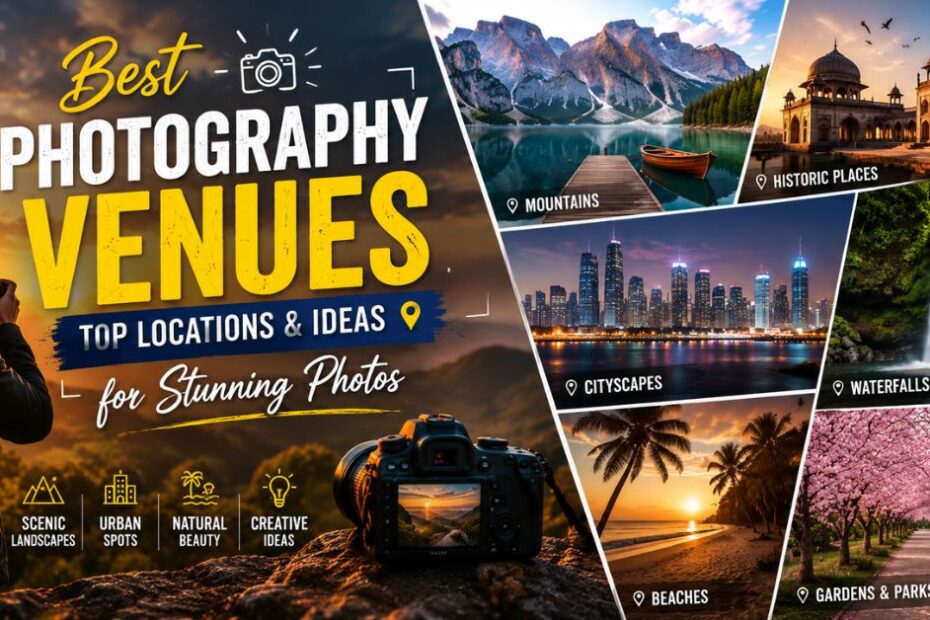
The right location can turn an ordinary photograph into something memorable. While cameras, lenses, and editing software matter, photography venues often shape the image before you even press the shutter.
A beautiful garden creates a completely different mood from an industrial warehouse. A quiet beach offers soft horizons and natural reflections, while a downtown street adds energy, architecture, and movement.
Whether you’re planning a portrait session, wedding shoot, engagement session, fashion campaign, family photos, or creative project, choosing the right venue gives you a stronger starting point.
This guide explores the best photography venues, practical location ideas, lighting considerations, venue-selection tips, and ways to get better results from almost any setting.
What Makes a Great Photography Venue?
A great photography location isn’t simply a beautiful place. It needs to work for the specific type of images you’re trying to create.
Before choosing a venue, consider these five essentials:
- Lighting: Is the available light suitable for your subject?
- Backgrounds: Does the location provide clean and interesting compositions?
- Accessibility: Can your subjects and equipment reach the shooting areas easily?
- Privacy: Will crowds interfere with the session?
- Rules: Does the venue allow professional or commercial photography?
A location might look impressive in photographs yet become difficult during an actual shoot. For example, a popular tourist attraction may have excellent architecture but constant crowds.
That’s why a quick scouting visit can save hours of frustration later.
Best Outdoor Photography Venues
Outdoor locations provide something studios can’t fully reproduce: constantly changing natural light. They also offer enormous variety in color, texture, depth, and atmosphere.
Parks and Botanical Gardens
Parks rank among the most flexible photography venues for portraits and family sessions.
Trees create natural frames. Walking paths provide leading lines. Gardens introduce flowers and seasonal colors. Open lawns give photographers room to work with wider compositions.
Botanical gardens can be especially useful because one location may contain several distinct backgrounds.
Best for:
- Portrait photography
- Engagement sessions
- Family photography
- Graduation portraits
- Lifestyle photography
- Fashion shoots
For softer portraits, photograph during the early morning or late afternoon. During harsh midday sunlight, look for open shade beneath trees or architectural structures.
Beaches and Waterfront Locations
Beaches offer clean horizons, reflective surfaces, and expansive backgrounds. They work particularly well when you want the subject to stand out against a simple environment.
Golden hour can add warm light across the scene. Blue hour creates a cooler atmosphere after sunset.
However, waterfront shoots require more planning. Wind can affect hair and clothing. Water can damage equipment. Crowds can also become a problem during popular hours.
Check local access rules before bringing professional equipment or setting up lighting.
Mountains and Scenic Lookouts
Mountain viewpoints create dramatic photographs because they provide depth on multiple levels.
Instead of placing the subject against a flat background, you can use layers of hills, valleys, clouds, and distant landscapes. Wide-angle lenses can emphasize the scale of the environment.
These venues work particularly well for:
- Adventure portraits
- Travel photography
- Engagement sessions
- Landscape photography
- Outdoor fashion campaigns
Weather matters more at higher elevations. A location that looks completely different under clear skies may become atmospheric and moody under clouds or fog.
Forests and Woodland Areas
Forests provide natural texture and filtered light. Trees can also act as vertical lines that guide attention toward your subject.
Early morning mist can create an atmospheric appearance, while autumn foliage can completely change the color palette.
When photographing in dense woodland, avoid placing your subject directly under small patches of bright sunlight. Uneven light across the face can create distracting highlights and shadows.
Lakes, Rivers, and Waterfalls
Moving water adds visual interest without requiring artificial props.
Lakes can provide reflections. Rivers introduce leading lines. Waterfalls create movement and scale.
For landscape work, a tripod and longer shutter speeds can help create smooth water effects. For portraits, keep the subject safely away from slippery edges and fast-moving water.
Best Urban Photography Venues
Cities offer endless combinations of architecture, color, movement, and texture.
Downtown Streets
Busy streets can create energetic editorial photographs. Glass buildings, storefronts, traffic lights, sidewalks, and crosswalks all become potential compositional elements.
Early mornings often provide cleaner backgrounds because fewer people and vehicles occupy the frame.
For lifestyle photography, however, some background activity can actually improve the image. A little movement makes the scene feel lived-in rather than staged.
Historic Districts
Historic neighborhoods often provide architectural details that modern buildings lack.
Old doors, brick walls, stone facades, arches, balconies, and narrow streets can create strong backgrounds for portraits and wedding photography.
Look for repeating architectural elements. Symmetry and patterns can make even a simple portrait feel carefully designed.
Rooftops and City Viewpoints
Rooftops provide elevated perspectives and impressive skyline backgrounds.
They’re particularly effective around sunset when the sky begins changing color while city lights start appearing below.
However, rooftop access should never be assumed. Confirm permission, operating hours, safety rules, and photography restrictions before planning a session.
Bridges and Architectural Landmarks
Large structures create powerful geometric compositions.
Railings, cables, stairways, and roadways can act as leading lines, naturally directing the viewer toward the subject.
Try photographing the same structure from several angles. A small change in position can dramatically alter symmetry and perspective.
Best Indoor Photography Venues
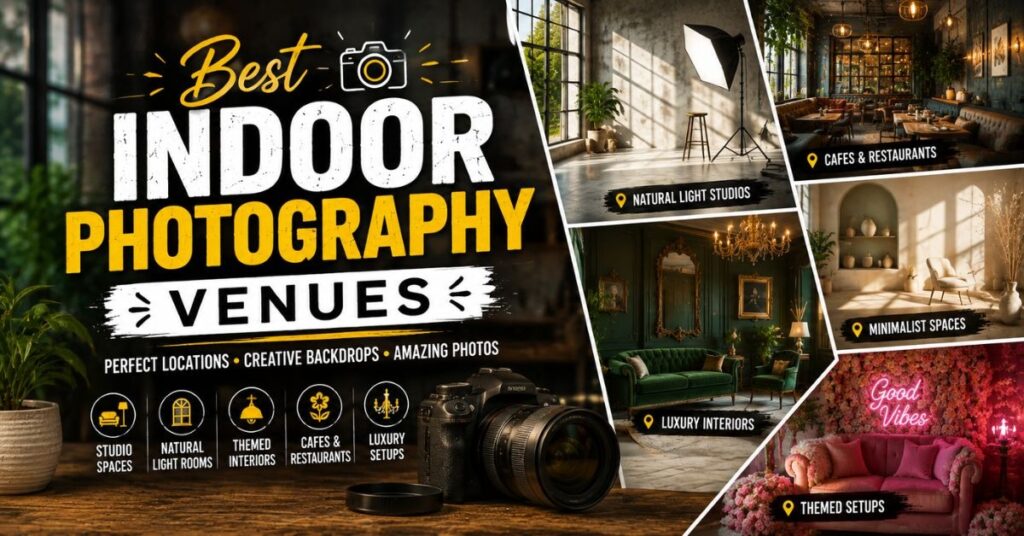
Indoor venues become especially valuable when weather, privacy, or lighting control matters.
Photography Studios
A professional studio gives you maximum control over the environment.
You can control:
- Background color
- Light direction
- Light intensity
- Shadows
- Subject positioning
- Props
- Reflections
Studios are excellent for fashion, portraits, headshots, products, and commercial campaigns.
They’re also reliable when outdoor weather becomes unpredictable.
Museums and Art Galleries
Museums and galleries can provide sophisticated architectural backgrounds. Clean walls, sculptures, dramatic lighting, and large open spaces can support editorial photography.
Always check the venue’s photography policy. Some locations prohibit flash, tripods, commercial photography, or photography in specific exhibits.
Hotels and Boutique Properties
Hotels often combine attractive architecture with multiple shooting environments.
A single property may provide:
- Lobby areas
- Staircases
- Hallways
- Rooms
- Outdoor terraces
- Restaurants
- Gardens
Luxury interiors can work particularly well for fashion and lifestyle photography.
Permission is essential, especially when using professional equipment or photographing for commercial purposes.
Cafés and Restaurants
Cafés create natural lifestyle settings because the environment already contains props such as tables, cups, food, windows, and furniture.
Large windows can provide excellent natural light. Positioning the subject near the window can produce soft illumination without complicated equipment.
For commercial photography, always ask the business owner or manager before setting up.
Read Also: How to Capture Emotions in Photography Like a Pro
Libraries and Bookstores
Bookshelves create strong repeating patterns and naturally frame subjects.
Warm interior lighting can produce an intimate atmosphere. Libraries are particularly useful for editorial portraits, author photography, student portraits, and intellectual-themed campaigns.
Best Photography Venues by Photography Style
Different photography genres need different environments. A location that works brilliantly for a wedding may be completely unsuitable for product photography.
| Photography Style | Strong Venue Choices | Key Advantage |
| Portraits | Parks, studios, gardens | Flexible backgrounds |
| Weddings | Estates, hotels, gardens | Multiple shooting areas |
| Engagements | Beaches, parks, streets | Natural storytelling |
| Fashion | Rooftops, studios, urban spaces | Strong visual identity |
| Family | Parks, beaches, gardens | Comfortable environments |
| Products | Studios, homes, cafés | Controlled compositions |
| Real estate | Homes, hotels, offices | Interior presentation |
| Editorial | Historic buildings, streets | Distinctive atmosphere |
Portrait Photography Venues
Portrait photography works best when the background supports the subject instead of competing with them.
Look for clean walls, shaded areas, textured architecture, gardens, or simple landscapes.
A useful trick is to move the subject farther from the background. More distance can help separate the subject visually and create stronger depth.
Wedding Photography Venues
Wedding photography requires more than one attractive backdrop.
A practical wedding venue should offer locations for:
- Getting-ready photographs
- Ceremony coverage
- Family portraits
- Couple portraits
- Reception details
- Candid photographs
A venue with several nearby shooting areas can save significant time during a busy wedding schedule.
Engagement Photography Venues
Engagement sessions benefit from locations that feel connected to the couple’s personality.
A favorite café, park, waterfront, bookstore, or city neighborhood can make photographs feel more personal than a generic backdrop.
Fashion Photography Venues
Fashion photography often benefits from bold architecture and distinctive environments.
Industrial spaces, modern buildings, rooftops, studios, and colorful urban streets can help establish a strong visual identity.
The venue should complement the clothing rather than overpower it.
Product Photography Venues
Product photography usually requires greater control.
A studio works well for clean catalog images. Lifestyle products may benefit from realistic environments such as kitchens, bedrooms, cafés, offices, or outdoor settings.
The important question is simple: Where would the customer naturally use this product?
Unique Photography Venue Ideas
Sometimes the most interesting location isn’t the obvious one.
Industrial Warehouses
Concrete floors, exposed beams, metal structures, and large windows can create an edgy editorial aesthetic.
Industrial spaces work particularly well for fashion, music-related promotional photography, and creative portraits.
Farms and Barns
Barns offer rustic textures and natural landscapes.
Wooden structures, open fields, fences, and agricultural equipment can create authentic rural compositions.
Seasonal changes also make these locations useful throughout the year.
Greenhouses
Greenhouses combine architecture with dense plant life.
The glass structure can create interesting reflections while plants add layers and natural color. Diffused sunlight can also produce flattering conditions for portraits.
Amusement Parks
Bright colors, geometric rides, signs, and unusual structures create playful backgrounds.
These venues can work especially well for creative portraits and colorful editorial campaigns.
Theaters and Performance Venues
Theaters provide dramatic architecture, stages, curtains, seating, and controlled lighting.
They’re particularly useful when the goal is to create a cinematic atmosphere.
Best Photography Venues by Season
The best location can change dramatically throughout the year.
| Season | Strong Venue Ideas | Visual Characteristics |
| Spring | Gardens, parks, orchards | Flowers and fresh greenery |
| Summer | Beaches, lakes, rooftops | Bright outdoor scenes |
| Fall | Forests, farms, parks | Warm foliage and earthy colors |
| Winter | Studios, cafés, historic interiors | Cozy indoor atmosphere |
Seasonal planning also affects clothing, accessibility, daylight hours, and weather conditions.
A location that works beautifully in autumn may look completely different in winter.
Best Photography Venues by Time of Day
Lighting changes throughout the day, so venue selection should include a time-of-day plan.
| Time | Suitable Venues | Main Benefit |
| Early morning | Parks, beaches, streets | Soft light and fewer crowds |
| Golden hour | Fields, beaches, mountains | Warm directional light |
| Midday | Studios, interiors, shaded parks | Greater lighting control |
| Blue hour | Rooftops, waterfronts, cities | Cool sky with emerging lights |
| Night | Downtown streets, bridges | Artificial lights and contrast |
Golden hour isn’t a magic filter. It simply provides favorable directional light during a limited period around sunrise or sunset.
Cloud cover also matters. A cloudy day can act like a giant softbox by spreading sunlight across the scene.
How to Choose the Right Photography Venue
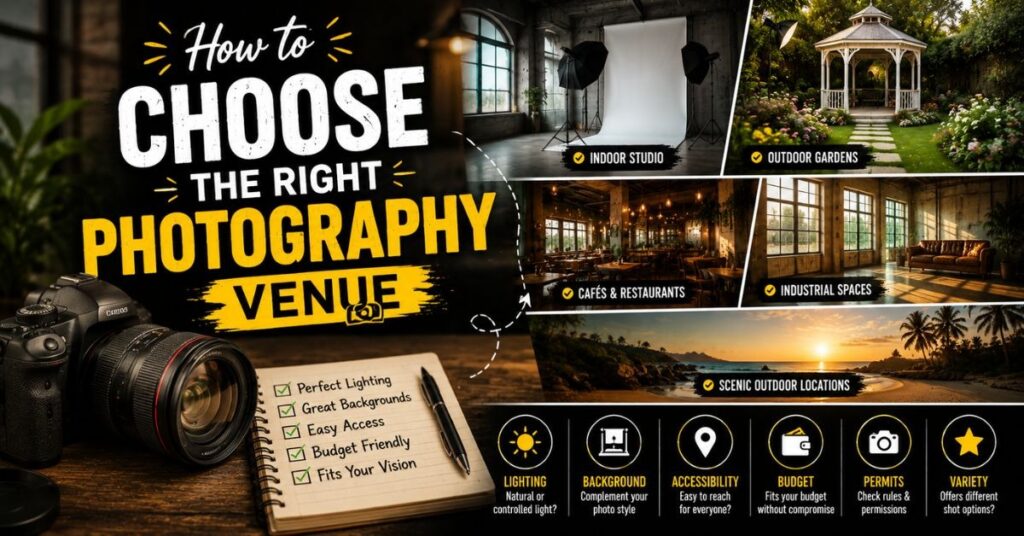
Start with the purpose of the shoot. Then work backward.
If you’re photographing a formal portrait, a chaotic street may create unnecessary distractions. If you’re shooting streetwear, however, that same environment could become an asset.
Match the Background to the Subject
Colors should complement the subject rather than fight for attention.
For example, a brightly colored outfit may work better against a neutral architectural background.
Scout the Location Before Shooting
A short scouting visit can reveal problems that online photographs won’t show.
Check:
- Light direction
- Background options
- Parking
- Noise
- Crowds
- Restrooms
- Weather exposure
- Accessibility
- Power availability
- Photography restrictions
Have a Backup Location
Outdoor photography always carries some uncertainty.
Rain, strong winds, extreme heat, unexpected closures, or crowded conditions can disrupt a session. An indoor backup gives you another option without rebuilding the entire plan.
Photography Venues on Different Budgets
You don’t need an expensive venue to create strong photographs.
Free Photography Locations
Examples include:
- Public parks
- Some beaches
- Public streets
- Scenic trails
- Certain public plazas
- Some outdoor architectural areas
Rules vary by location, so check local regulations before professional or commercial shoots.
Affordable Photography Venues
Consider:
- Small studios
- Cafés
- Community spaces
- Local gardens
- Short-term creative spaces
These options can provide more control without the cost of premium event venues.
Premium Photography Venues
Luxury hotels, private estates, professional studios, historic properties, and exclusive event spaces can provide polished environments.
Their biggest advantage isn’t simply appearance. Premium venues often offer better infrastructure, privacy, multiple shooting areas, and controlled access.
How to Find Photography Venues Near You
Start with map-based searches. Instead of searching only for “photography locations,” use specific phrases such as botanical gardens, historic buildings, scenic overlooks, industrial spaces, rooftops, beaches, or portrait studios.
Social media can also help identify visually interesting places. Location tags often reveal how photographers have already used a venue.
Still, don’t copy another photographer’s composition blindly. Study what works, then find your own angle.
Building a personal location library is even better.
Keep notes about:
- Best shooting time
- Parking
- Lighting
- Seasonal changes
- Permission requirements
- Crowds
- Nearby backup locations
Over time, this becomes one of the most useful resources in a photographer’s workflow.
Photography Venue Checklist
Before the session, run through this quick checklist:
- Permission: Is professional photography allowed?
- Timing: When does the venue open?
- Lighting: Where will the sun be?
- Crowds: When is the location busiest?
- Access: Can equipment reach the shooting area?
- Weather: Is there an indoor alternative?
- Facilities: Are restrooms and changing areas available?
- Equipment: Are tripods, lights, or reflectors permitted?
- Parking: Can the team park nearby?
- Backup: What’s the second-choice location?
A few minutes of preparation can prevent major problems on shoot day.
Tips for Getting Better Photos at Any Venue
Even a simple location can produce excellent results when you use it thoughtfully.
Look for Natural Frames
Doorways, windows, arches, trees, and tunnels can surround the subject naturally.
This technique adds depth while directing attention toward the main subject.
Use Leading Lines
Roads, staircases, fences, railings, and pathways can guide the viewer’s eyes through the frame.
Try placing the subject where several lines visually converge.
Change Your Perspective
Don’t photograph everything from eye level.
Move closer. Step backward. Lower the camera. Try a higher viewpoint. Small changes can completely reshape the composition.
Keep the Background Clean
Watch for poles appearing behind heads, distracting signs, parked cars, random objects, and bright highlights.
A cleaner background often improves an image more than an expensive lens does.
Capture Wide and Tight Shots
Start with a wide composition that establishes the venue.
Then move closer for portraits, details, textures, and expressions.
This approach gives you a complete visual story rather than a collection of nearly identical photographs.
A Practical Example: Turning One Venue Into Multiple Looks
Imagine a photographer has booked a botanical garden for a portrait session.
Instead of staying in one spot, the photographer can create several visual setups:
- Garden path: Use the path as a leading line.
- Flower section: Add color and seasonal detail.
- Tree-covered area: Use soft shade for portraits.
- Open lawn: Create clean compositions with negative space.
- Garden architecture: Use arches, doors, or structures as frames.
The venue hasn’t changed. The composition, lighting, perspective, and background have.
That’s an important lesson for location photography: you don’t always need a new venue. Sometimes you need a new way to see the existing one.
“The best camera is the one that’s with you.” — Chase Jarvis
The principle applies to locations, too. A familiar place can produce remarkable images when you understand its light and composition.
Frequently Asked Questions About Photography Venues
What is the best location for portrait photography?
Parks, botanical gardens, studios, historic districts, and quiet urban areas are strong choices. The best option depends on the desired background, lighting, and mood.
What makes a good outdoor photography location?
Look for attractive backgrounds, useful natural light, accessibility, manageable crowds, and enough space to change compositions.
Do photographers need permission to shoot at a venue?
Sometimes. Public photography rules vary by location. Commercial shoots, tripods, lighting equipment, large crews, and private properties may require permission or permits.
What is the best time of day for outdoor photography?
Early morning and late afternoon often provide softer directional light. However, the best time depends on the location, weather, subject, and intended visual style.
What are the best free photography locations?
Public parks, some beaches, scenic trails, public streets, and certain outdoor spaces can provide excellent results without a venue rental fee. Always verify local rules.
How do I find unique photography locations near me?
Use map searches, local photography communities, social media location tags, tourism websites, and personal scouting trips. Search for specific venue types rather than relying on broad searches.
What should I check before choosing a photography venue?
Check permission, lighting, opening hours, crowds, accessibility, parking, weather exposure, equipment rules, and backup options.
Final Thoughts on Choosing the Best Photography Venue
The best photography venues don’t necessarily have the biggest price tags or the most dramatic scenery. What matters is how well the location supports your subject, lighting, composition, and creative goal.
A quiet park can produce beautiful portraits. A small café can tell a compelling lifestyle story. An ordinary city street can become an excellent fashion backdrop when you use architecture, light, and perspective effectively.
Before booking a location, think beyond its appearance. Study the light. Check the rules. Scout the backgrounds. Consider the people and equipment involved.
Most importantly, choose a venue that helps communicate the story behind the photograph.